Bible Verses for Anxiety

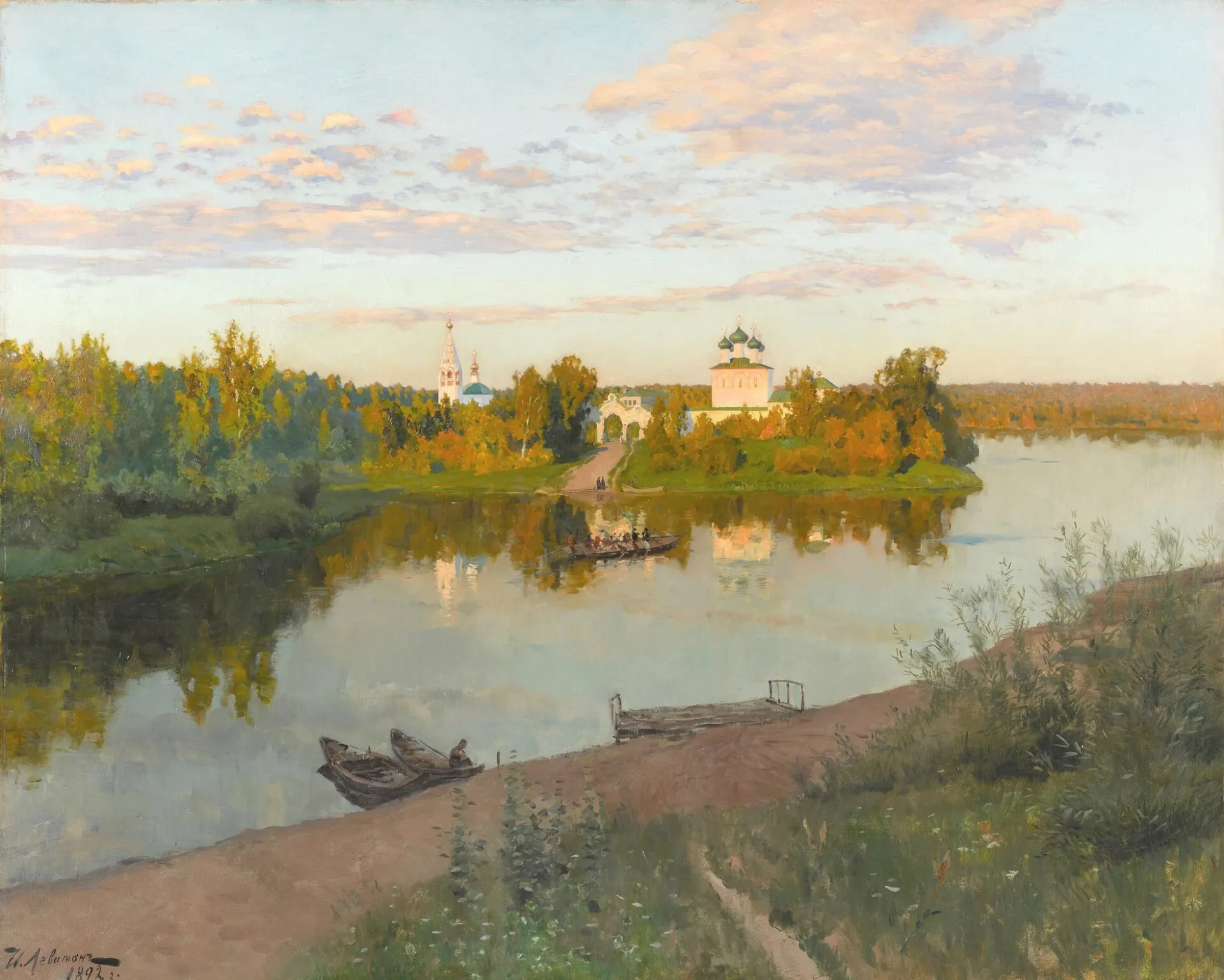
Ivan Aivazovsky, Calm Sea (1887) · public domain
If your mind won’t stop racing, these Bible verses for anxiety are a place to rest it for a few minutes. Below are fifteen verses in the King James Version, grouped by what you are feeling, each with a short note on its background, followed by a three-minute way to pray and two prayers.
Is anxiety a sign of weak faith?
No. The Bible is full of anxious people, and God never treats them with contempt. On the night before he died, Jesus himself was deeply distressed in Gethsemane (Mark 14:33–34). Paul wrote of the pressure he carried every day from his concern for the churches (2 Corinthians 11:28). And Elijah, right after one of the great victories of his life, sat down under a desert bush and asked God to let him die (1 Kings 19:4). God’s first answer was sleep and food, brought twice by an angel, before any conversation at all.
That order is worth remembering. Anxiety affects your body, and caring for your body is part of caring for your soul. If anxiety has lasted for weeks, is disrupting your sleep or work, or comes with panic attacks, please talk with a doctor or counselor; getting help is not a failure of faith, and you can keep praying the whole way through. In the US, if you are in crisis or thinking about suicide, you can call or text 988 to reach the Suicide & Crisis Lifeline.
Bible verses for anxiety, by what you are feeling
When worry won’t stop
Be careful for nothing; but in every thing by prayer and supplication with thanksgiving let your requests be made known unto God. And the peace of God, which passeth all understanding, shall keep your hearts and minds through Christ Jesus.
Paul wrote this from prison to a church he loved. “Be careful for nothing” is old English for “don’t be anxious about anything,” and the instruction that follows is practical: turn each worry into a request, and add thanks.
Casting all your care upon him; for he careth for you.
Peter wrote to Christians under real pressure. To “cast” something is to throw it off yourself, the way you’d drop a heavy pack, and the reason given is simple: he cares for you.
Take therefore no thought for the morrow: for the morrow shall take thought for the things of itself. Sufficient unto the day is the evil thereof.
Jesus said this in the Sermon on the Mount, just after pointing to the birds and wildflowers that God feeds and clothes. You can plan for tomorrow without carrying all of it today.
In the multitude of my thoughts within me thy comforts delight my soul.
The phrase “the multitude of my thoughts” is a good description of an anxious mind. The psalmist doesn’t say the thoughts disappeared; he says God’s comfort reached him in the middle of them.
When you are afraid
What time I am afraid, I will trust in thee.
David wrote this psalm when the Philistines had seized him in Gath. He doesn’t claim he will never be afraid. He decides in advance what he will do when fear comes.
Fear thou not; for I am with thee: be not dismayed; for I am thy God: I will strengthen thee; yea, I will help thee; yea, I will uphold thee with the right hand of my righteousness.
God spoke these words to Israel in exile. Count the verbs: God says he will be with you, strengthen you, help you and uphold you.
Have not I commanded thee? Be strong and of a good courage; be not afraid, neither be thou dismayed: for the LORD thy God is with thee whithersoever thou goest.
God said this to Joshua just after Moses died, when Joshua had to lead a nation into unknown country. The courage asked of him rests on company: God would be with him wherever he went.
For God hath not given us the spirit of fear; but of power, and of love, and of a sound mind.
Paul wrote to his younger friend Timothy from prison, near the end of his own life. A “sound mind” means a steady, disciplined mind, which is a good thing to ask for on an anxious day.
I sought the LORD, and he heard me, and delivered me from all my fears.
The heading of Psalm 34 ties it to a frightening moment when David pretended to be mad to escape a foreign king. He tells the story so that others will try what he tried.
When you are carrying too much
Cast thy burden upon the LORD, and he shall sustain thee: he shall never suffer the righteous to be moved.
David wrote Psalm 55 after being betrayed by a close friend (Psalm 55:12–14). His advice, to himself and to us, is to hand the weight over.
Come unto me, all ye that labour and are heavy laden, and I will give you rest. Take my yoke upon you, and learn of me; for I am meek and lowly in heart: and ye shall find rest unto your souls. For my yoke is easy, and my burden is light.
A yoke joined two animals so they could pull a load together. Jesus offers to share yours, and describes himself as gentle while he does it.
When you need to know you are not alone
And the LORD, he it is that doth go before thee; he will be with thee, he will not fail thee, neither forsake thee: fear not, neither be dismayed.
Moses spoke these words to Joshua in front of all Israel, shortly before his own death. God goes ahead of you into the situation you dread, and is already there when you arrive.
Let your conversation be without covetousness; and be content with such things as ye have: for he hath said, I will never leave thee, nor forsake thee.
The writer of Hebrews takes God’s old promise to Joshua and applies it to ordinary worries, including money. Contentment becomes possible because you are not on your own.
God is our refuge and strength, a very present help in trouble.
Psalm 46 imagines the worst: mountains falling into the sea and nations in uproar. In the middle of it, God is “a very present help,” close at hand right now.
When you need to be still
Be still, and know that I am God: I will be exalted among the heathen, I will be exalted in the earth.
The same psalm ends with God speaking. The Hebrew behind “Be still” carries the sense of letting go, a call to stop struggling for a moment and remember who is God.
A three-minute breathing prayer
This works anywhere: in bed, in a parked car, in a bathroom stall at work. It uses Psalm 56:3 because the verse splits naturally in two.
- Sit or lie down and let your shoulders drop (thirty seconds).
- Breathe in slowly through your nose and pray silently, “What time I am afraid.”
- Breathe out a little more slowly than you breathed in, and pray, “I will trust in thee.”
- Repeat for about two minutes. If your thoughts run off, notice it and start again without scolding yourself.
- Finish by naming one worry to God and setting it down (thirty seconds).
On some days the fear will ease while you pray, and on others it won’t. Either way you have spent three minutes turning toward God instead of away from him. The prayers for peace include a similar one-minute prayer, and the prayers before sleep are written for nights when worry keeps you awake.
Prayers for anxiety
Lord, my mind is racing and my chest is tight. I keep turning the same worries over and over without finding a way out. You know every one of them, even the ones I can't name.
I cast these cares on you now, one at a time. Take what I can't carry. Slow my breathing and quiet my thoughts. Where there is something I need to do, show me the next small step; where there is nothing I can do, help me leave it with you.
If I pick these worries back up in an hour, I will bring them to you again, and you won't be tired of hearing them. Thank you that you care for me more than I care for myself. Amen.
Lord, I'm frightened right now and my heart is pounding. You are here, and you are bigger than this fear. Hold me until it passes. Amen.
Using these verses through the week
Pick one verse for each day and keep it close: on your phone, on a card in your pocket, on the fridge. When worry starts, read the verse before you do anything else. If the mornings are hardest, the morning prayers include one for a day you dread. And when worry has worn you down to discouragement, the Bible verses about hope were written for that place too.
These prayers were written with AI assistance for Mercy Evermore and checked against Scripture before publishing. They are offered for personal devotion and are not a substitute for pastoral, medical or mental-health care. Scripture quotations are from the King James Version (public domain).